
“How easily we cling to—worship—the choice we think we could or should have made.”
~Edith Eva Eger, The Choice: Embrace the Impossible
If you have experienced childhood sexual abuse, you may know exactly what it feels like to live with the endless “if onlys.”
- If only I had told someone.
- If only I had fought harder.
- If only I had known what was happening.
- If only someone had noticed.
- If only I had made a different choice.
It is astonishing how much of our lives can become organized around choices we believe we should have made in the past. And yet, there is a problem with living there: the past is not where our power is.
You cannot change what happened to you. You cannot go back and protect the child you were, and you cannot rewrite another person’s choices. But you can begin making different choices now.
That is a significant part of what sexual abuse recovery can become: not simply learning how to survive what happened, but learning how to live from choice, presence, and possibility again.
Here are seven choices that can help you move toward healing and reclaiming your life.
1. Choose to stop making the past your present.
One of the effects of child abuse can be getting caught in cycles of rumination, regret, anxiety, and “what if” thinking. Our brains are wired to look backward when something feels unresolved. We replay conversations, imagine alternative outcomes, and search for the moment when everything might have been different.
But there is a trap here.
If you keep playing the same song in your mind, you leave very little room for a new one.
This does not mean you should simply “stop thinking about it.” Trauma does not work that way. Your experiences deserve to be acknowledged, processed, and understood. It means recognizing the difference between processing the past and repeatedly punishing yourself with it.
Healing after child sexual abuse asks us to eventually shift the question from, “What should I have done?” to, “What can I choose now?”
That is a very different question. It moves you from a life that is continually happening to you into a life you are actively experiencing, crafting, creating, and stewarding.
2. Choose self-forgiveness over self-blame.
Many survivors carry an enormous amount of guilt and shame. Sometimes we feel guilty for what happened. Sometimes we feel guilty about how we responded. Sometimes we blame ourselves for not:
- recognizing the abuse
- stopping it
- telling someone
- leaving
- fighting back
- or somehow preventing it
But,
A child is never responsible for someone else’s decision to sexually abuse them. Whether that person is an adult or another child.
And having a trauma response is not a moral failure.
Self-forgiveness does not mean pretending that what happened was okay. It does not mean minimizing the abuse or letting the person who hurt you off the hook. It means releasing yourself from the impossible expectation that you should have somehow been able to control circumstances you did not control.
There is another reason self-forgiveness can be difficult: guilt can actually become familiar.
When we are used to blaming ourselves, letting go of guilt can feel surprisingly uncomfortable. Underneath that guilt may be grief, and grief is harder.
Grief asks us to acknowledge what we lost: the childhood we deserved, the safety we should have had, the relationships that may have been different, and the years spent struggling with the effects of sexual abuse. But grief can also be the doorway to something new.
You do not have to stay guilty in order to prove that what happened mattered.
3. Choose to listen to your body, not just your thoughts.
For many survivors, the effects of childhood sexual abuse are not simply intellectual. Trauma can live in the nervous system.
You may understand logically that you are safe while your body is still responding as though danger is around the corner. Anxiety, hypervigilance, shutdown, difficulty trusting, sleep problems, overwhelm, or a tendency to people-please can all be part of the experience of PTSD from childhood sexual abuse and other trauma responses.
This is why healing sexual trauma often requires more than simply thinking differently. Your body needs new experiences of safety, too.
Learning to notice your breathing, muscle tension, impulses, emotions, and patterns of activation can give you valuable information.
When trying to heal after child sexual abuse, instead of asking, “What’s wrong with me?” try asking, “What is my body telling me?”
And, “What is happening in my nervous system right now? What do I need?” That shift from judgment to curiosity can be powerful.
Your symptoms are not evidence that you are broken. They may be evidence that your system learned very effectively how to protect you in an environment that was not safe. Healing involves teaching yourself that some of those old protective strategies may no longer be necessary in the same way.
4. Choose boundaries over self-abandonment.
For many survivors, boundaries are not simply about learning how to say no. They are about learning that your needs matter.
If you grew up learning to monitor other people’s moods, avoid conflict, keep the peace, or make yourself small, setting a boundary can feel incredibly uncomfortable. You might worry that someone will be angry, you may feel selfish, or immediately question whether you are being unreasonable. You may even know exactly what you want to say but feel physically unable to speak it.
That does not mean the boundary is wrong. It may mean you are learning a skill you were never given the opportunity to develop safely.
A boundary can be as simple as, “I don’t want to talk about that,” “I need some time before I answer,” “I’m not comfortable with that,” or simply, “No.”
You do not have to provide a courtroom defense for every boundary you set.
Sometimes healing requires a much stronger boundary, including ending contact with someone. Going no contact is not the right choice in every situation, and it should not be treated as a universal prescription for survivors. But you are allowed to consider whether a relationship is supportive, harmful, or simply no longer healthy for you.
Boundaries are not punishment. They are one way we practice self-respect.
5. Choose relationships that support your healing.
One of the complicated effects of sexual abuse can be difficulty recognizing what healthy relationships actually feel like.
If chaos, unpredictability, manipulation, or emotional inconsistency were familiar in childhood, familiarity can sometimes get confused with safety. That can affect friendships, family relationships, and romantic relationships.
You might find yourself drawn to people who recreate dynamics you desperately wanted to escape. Or you might swing in the opposite direction and become so afraid of getting hurt that you avoid intimacy altogether.
Healing does not require you to become perfectly skilled at relationships. It asks you to become increasingly curious about what happens inside you when you are with another person. Can you be yourself? Can you say no? Can you disagree? Can you ask for what you need? Can you make a mistake without fearing punishment or rejection? Can you receive care without feeling that you owe something in return?
These questions become especially important when dating after sexual assault or childhood sexual abuse.
Healthy connection is not about finding someone who will never trigger you. It is about developing relationships where there is enough safety, respect, honesty, and accountability to work through what gets triggered.
6. Choose support that actually fits your needs.
You do not have to heal sexual trauma alone.
Therapy can be an important part of sexual abuse recovery, particularly when you find a therapist or counselor who understands trauma and the specific effects of sexual abuse. But finding support is not simply about choosing someone with the right credentials. It is also about fit.
Consider asking yourself:
- Does this person understand childhood sexual abuse?
- Do I feel respected and believed?
- Can I ask questions about the approach they use?
- Do they explain what we are doing and why?
- Do I feel like I have a voice in my own healing?
- Can they work with the ways trauma affects both the brain and body?
- Do I feel safe enough to be honest?
Remember: a therapist/mentor can be highly qualified and still not be the right therapist/mentor for you.
It is okay to keep looking. It is also okay to ask for what you need during your sessions. You are not supposed to be a passive recipient of treatment. Your healing belongs to you.
Whether you pursue therapy, coaching, a support group, or another trauma-informed resource, look for support that helps you develop greater understanding, agency, and connection with yourself rather than making you increasingly dependent on someone else to tell you what to do.
7. Choose the life you have, not the life you didn’t get.
This may be the hardest choice of all. There can be so much grief around the life you should have had:
- the childhood you should have experienced
- the person you might have become without the abuse
- the relationships that might have been different
- and the opportunities you might not have missed
It is understandable to grieve those things. But there comes a point when the life you didn’t live can become the only life you prize. And what a tragedy that would be. Not because your past doesn’t matter. It matters enormously. But because:
Your past does not deserve to consume every possibility your present and future still hold.
Edith Eva Eger, a Holocaust survivor and psychologist, writes about the freedom that comes from recognizing that while we cannot change what happened, we can choose how we live now. That is where I believe the real possibility of sexual abuse healing begins.
Not in pretending the past didn’t happen. Not in forcing yourself to forgive someone who harmed you. Not in deciding you should be “over it” by now. And not in becoming the person you think you would have been if the abuse had never happened.
Instead, it is in becoming more fully the person you are capable of being now.
What matters to you now?
What relationships do you want? What will and will you not tolerate? How do you want to care for yourself? What do you want to create? What comes next?
These are not small questions. They are the questions that help you begin building a life that belongs to you.
Healing after child sexual abuse is not about erasing the past.
Recovering from abuse does not mean you will never feel anger, grief, fear, sadness, or activation again. Healing is not about becoming untouched by what happened. It is about becoming less controlled by it. There is a profound difference.
The goal is not to construct a perfect life in which nothing ever hurts. The goal is to develop the capacity to meet your life as it is, with greater choice, awareness, self-trust, and compassion.
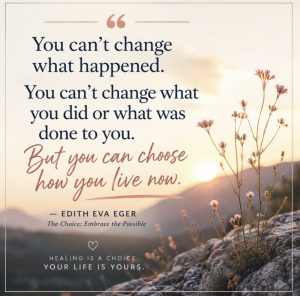
You cannot change what happened. You cannot change what you did or what was done to you. But you can choose how you live now.
Sometimes healing begins with one very small choice. Instead of asking, “What should I have done?” you ask, “What can I choose today? That is where your life is. Not back there. Here.
And there is still so much life available to you.
Rachel Grant is a disruptor of traditional modes of healing, creator of the Beyond Surviving Method, international speaker, podcast host, and Sexual Abuse Recovery Coach with an M.A. in Counseling Psychology. She is also the author of Beyond Surviving: The Final Stage in Recovery from Sexual Abuse.
Based on her educational training, study of neuroscience, and lessons learned from her own journey, she has successfully used the Beyond Surviving Program since 2007 to help survivors of childhood sexual abuse who are beyond sick and tired of feeling broken and unfixable break free from the pain of abuse and finally move on with their lives.
Learn more at www.rachelgrantcoaching.com.